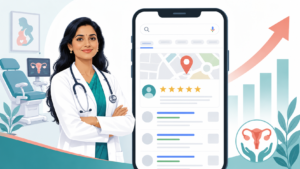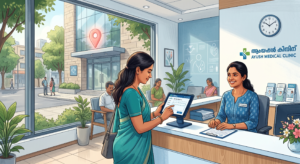
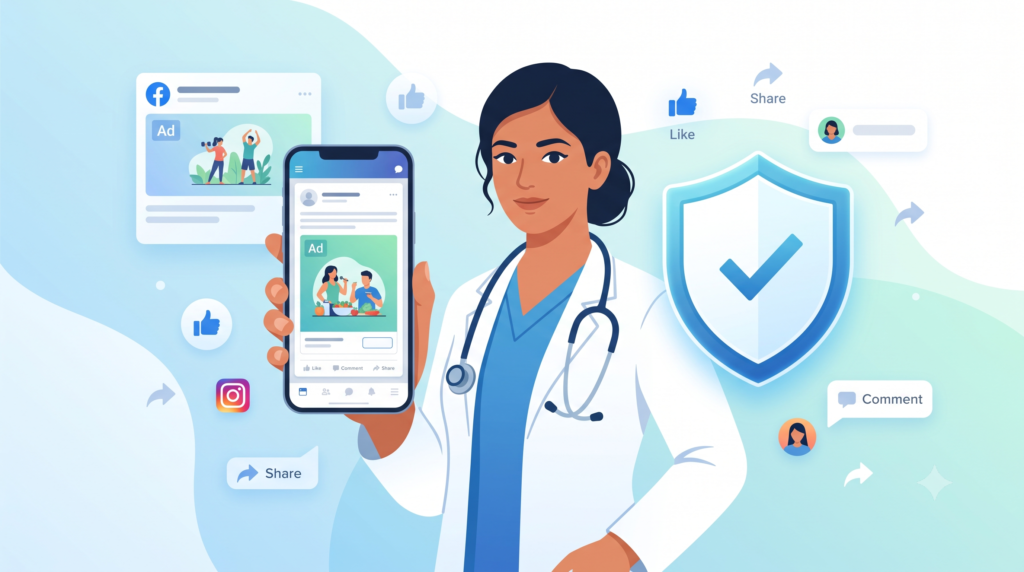
If you run Facebook or Instagram ads for your clinic, 2026 is the year the ground shifted under your feet.
Over the last eighteen months, Meta has quietly rewritten how healthcare advertising works on its platforms. Campaigns that performed beautifully in 2024 are now getting rejected. Lead forms that used to fill your appointment book are suddenly “restricted.” And many doctors across India are discovering — usually the hard way — that their ad account has been slapped with a “Health & Wellness” label they never asked for.
Here’s the frustrating part: most of this isn’t explained anywhere in plain language. Meta’s policy pages are dense, written for global audiences, and rarely address the questions Indian doctors actually ask — Can I still run ads for my clinic? Can I show patient results? Why did my lead campaign stop working?
That’s exactly what this guide answers. We work with doctors and clinics across India every single day, and this article breaks down the Meta health ad policy India doctors need to understand in 2026 — what changed, what’s banned, what’s still allowed, and how to keep patient enquiries flowing without risking your ad account.
Let’s get into it.
What Is Meta’s Health Ad Policy? (A Quick Refresher)
Meta — the parent company of Facebook, Instagram, and WhatsApp — has always had rules for health-related advertising. For years, those rules mostly covered the obvious things: no miracle cures, no misleading claims, no prescription drug promotion without authorisation.
But starting in January 2025, Meta introduced something much bigger: a dedicated Health & Wellness advertiser category with its own compliance framework. <cite index=”1-1″>Unlike the traditional Special Ad Categories (housing, employment, credit), this new classification came with restrictions specifically designed around sensitive health data</cite> — and those restrictions have expanded steadily through 2026.
The core idea behind the policy is simple: Meta has faced years of criticism over how health-related data flows through its tracking tools. <cite index=”3-1″>In response, the company is drawing a much sharper line between everyday marketing and what it considers sensitive health content.</cite>
For you as a doctor or clinic owner, this means two things:
- What you can say in your ads is more tightly controlled than ever.
- What Meta lets you track and optimise for has been significantly cut back.
Both affect your patient acquisition. Let’s unpack each.
The Big Change: Automatic Health & Wellness Categorisation
The single most important thing to understand about the Meta health ad policy in India (and globally) is this: you don’t choose the Health & Wellness category — Meta assigns it to you.
<cite index=”3-1″>Meta automatically classifies advertisers based on their websites and apps. If your website, landing page, or app mentions medical conditions, treatments, or wellness services, Meta may place your business under its Health & Wellness group without asking.</cite>
For Indian clinics, this covers practically everyone:
- A dermatologist’s website listing acne or hair loss treatments
- An IVF centre’s landing page describing fertility procedures
- A dental clinic promoting implants or aligners
- A physiotherapy centre, a diabetes clinic, an eye hospital — all of it
<cite index=”3-1″>Condition-specific pages — mental health, orthopaedics, weight loss and similar — are especially likely to get flagged and face additional restrictions.</cite>
Once you’re categorised, a set of data and optimisation limits kicks in automatically. Which brings us to the change that hurt clinics the most.
Restriction on Lower-Funnel Conversion Events
This is the one that broke thousands of campaigns.
<cite index=”1-1″>Healthcare advertisers can no longer optimise campaigns for lower-funnel conversion events. That means you cannot use Purchase, Lead, or appointment-booking events as the optimisation goal for your campaigns.</cite>
In plain words: earlier, you could tell Meta, “Show my ads to people most likely to book an appointment,” and the algorithm would hunt for exactly those people using conversion data from your website pixel. That option is now heavily restricted for health advertisers.
<cite index=”14-1″>Most health and wellness brands face a partial restriction, while a full restriction applies mainly to businesses linking to highly sensitive web properties such as patient portals.</cite> <cite index=”14-1″>And heading into 2026, Meta expanded enforcement further — targeting custom audiences, lookalike audiences, and custom conversions built from health-related data.</cite>
<cite index=”9-1″>Meta’s own recommendation? Shift focus to upper-funnel events — awareness, engagement, video views, landing page views — to keep campaigns optimising effectively.</cite>
What this means for your clinic: the “lazy” way of running Meta ads — one lead campaign optimised for form fills — is dying. The clinics winning in 2026 have restructured around awareness content, retargeting, and WhatsApp conversations (more on that shortly).
What Content Is Banned in Health Ads in 2026?
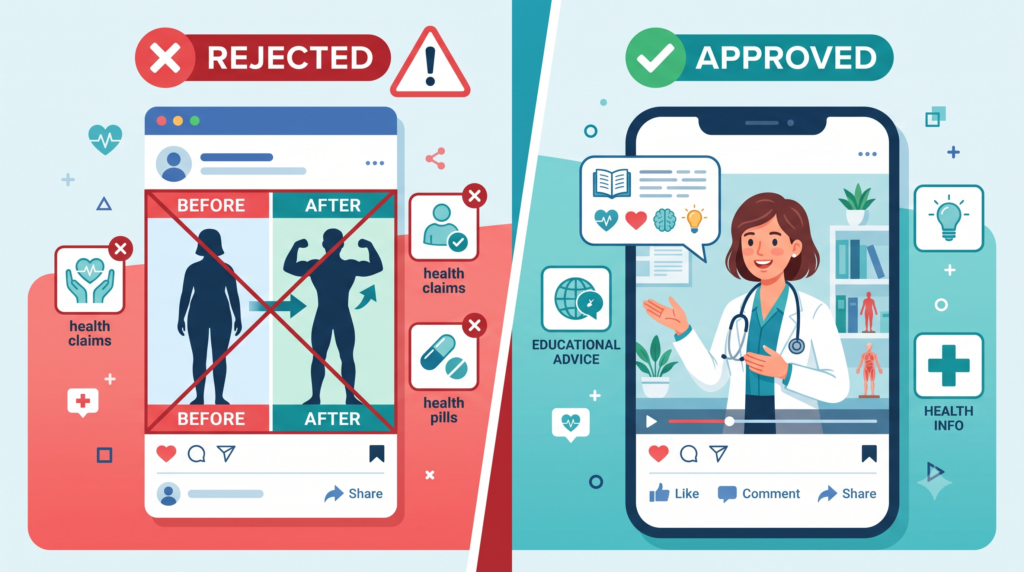
Alongside the data restrictions, Meta tightened its content rules considerably. If your ads keep getting rejected, one of these is almost certainly the reason.
1. Before/After Images — Now Including “Implied” Transformations
Before/after photos have been restricted for years, but 2026 pushed this much further. <cite index=”2-1″>The ban now extends to implied transformations — meaning even showing your product or service next to an image of a fit, healthy person can be treated the same as a traditional before/after split. Testimonial videos where a patient describes their “journey” while looking visibly healthy can also trigger the classifier.</cite>
For hair transplant clinics, dermatologists, weight management centres, and cosmetic surgeons in India, this is a major creative rethink. Those transformation reels that used to drive enquiries? High rejection risk now.
2. Personal Attributes and “You Have This Condition” Language
Meta has long prohibited ads that assert or imply knowledge of someone’s medical condition. In 2026, enforcement expanded to catch indirect phrasing too. <cite index=”6-1″>Now flagged: conditional phrasing like “If you’ve been diagnosed with…”, empathy hooks like “We understand your pain”, implied targeting like “For those managing anxiety”, and second-person health claims like “Your back pain doesn’t have to control you.”</cite>
<cite index=”6-1″>Enforcement extends beyond the ad itself — to headlines, primary text, and even the first line of your landing page.</cite> Yes, Meta is reading your landing page copy too.
This is a big deal for Indian clinic ads, which have traditionally leaned on exactly this style of copy — “Suffering from knee pain?” “Struggling with hair fall?” That entire copywriting formula now needs to be retired.
3. Outcome Claims and Guarantees
<cite index=”18-1″>Health-related promotions require careful wording that avoids claims about outcomes, cures, or guarantees.</cite> Phrases like “100% results,” “permanent cure,” “guaranteed pregnancy,” or “sure-shot weight loss” will get an ad disapproved — and repeated violations damage your entire account’s standing.
4. Age Targeting Rules
<cite index=”8-1″>Weight loss and body image ads cannot target users under 18 under any circumstances</cite> — and Meta enforces these age restrictions automatically at the campaign level. Sensible defaults for most Indian clinics: target 18+ (or 25+ for aesthetic services), always.
The India Angle: It’s Not Just Meta’s Rules You’re Following
Here’s something international guides miss entirely — Indian doctors are answerable to more than just Meta.
NMC (National Medical Commission) Ethics Guidelines
Indian medical practitioners operate under professional conduct rules that restrict self-promotion, prohibit misleading advertisements, and frown on soliciting patients through exaggerated claims. Even if Meta approves your ad, an over-promotional campaign can invite professional scrutiny. The safest creative direction — educational, informative, doctor-led content — happens to be the same direction Meta’s policy pushes you toward. Convenient, actually.
DPDP Act 2023 (Digital Personal Data Protection)
<cite index=”10-1″>For Indian healthcare providers, the DPDP Act adds an additional layer of obligation. Consent mechanisms on your landing pages and appointment forms must be clear, granular, and documented.</cite> If your ad sends a patient to a form collecting their name, phone number, and health concern, that form needs proper consent language — not just for Meta compliance, but for Indian law.
Drugs and Magic Remedies Act
Ads suggesting treatment for certain conditions (fertility issues, sexual health, certain chronic diseases) fall under India’s Drugs and Magic Remedies (Objectionable Advertisements) Act. Combine this with Meta’s rules and the message is consistent: promote your practice and expertise, not miracle outcomes for specific diseases.
So when we talk about the Meta health ad policy India context, think of it as three overlapping circles — Meta’s platform rules, NMC’s professional ethics, and Indian data/advertising law. Your ads need to sit in the safe zone of all three.
So Can Doctors Still Run Meta Ads in India? (Yes — Here’s Proof)
Let’s kill the panic first. <cite index=”11-1″>Meta ads for healthcare are permitted in India, with content restrictions: no before/after images in paid promotion, no health outcome claims, no condition-based targeting. Compliant formats — doctor-led educational content, clinic showcases, and service promotion without guaranteed outcomes — are fully permitted and widely used.</cite>
The policy didn’t kill healthcare advertising. It killed shortcut healthcare advertising.
Clinics that relied on aggressive claim-heavy creatives and pure lead-form campaigns are struggling. Clinics that invested in trust-first, education-first advertising are doing better than ever — partly because their competitors’ ads keep getting rejected.
Here’s what’s working in 2026.
1. Doctor-Led Educational Content
<cite index=”15-1″>Short doctor education reels (45–90 seconds), patient journey narratives, and facility tours</cite> are the backbone of compliant healthcare campaigns in India right now. A dermatologist explaining “5 myths about hair fall” builds more trust — and passes review more easily — than any transformation photo ever did.
This is also where personal branding pays off directly. Patients in India increasingly choose a doctor, not just a clinic. Ads featuring the actual doctor consistently outperform faceless clinic creatives.
2. Click-to-WhatsApp (CTWA) Campaigns
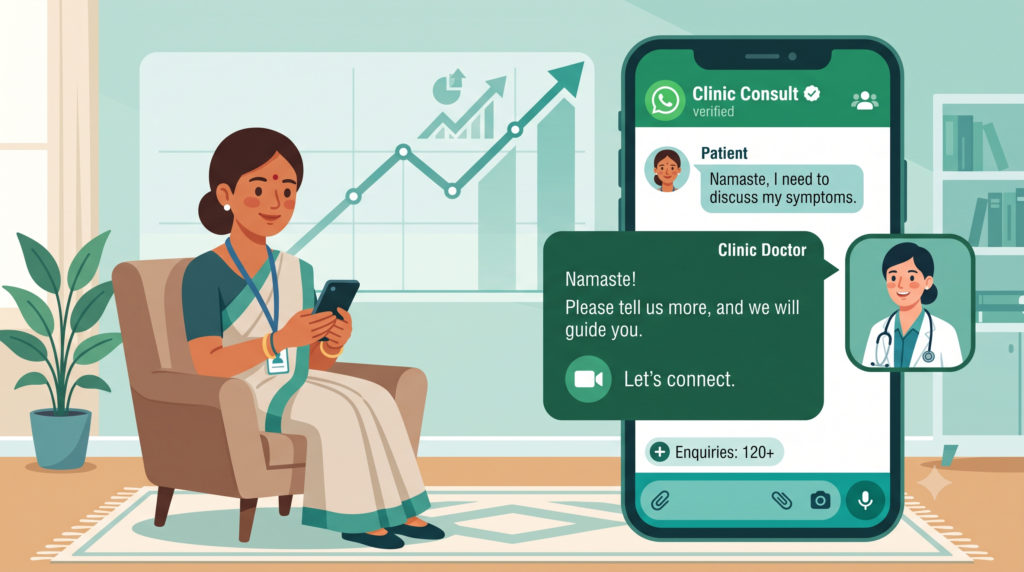
With lead-form optimisation restricted, Indian clinics have shifted heavily toward WhatsApp. <cite index=”11-1″>Click-to-WhatsApp ads open a conversation with your clinic instead of a landing page — and they convert at significantly higher rates than link-click ads for most healthcare specialties in India, because WhatsApp removes the friction of first contact. No form, no landing page, no delay.</cite>
For a country where WhatsApp is practically the default communication channel, this shift was natural. It also sidesteps some tracking limitations, since the “conversion” happens inside Meta’s own ecosystem.
3. The Two-Stage Funnel: Awareness First, Conversion Second
<cite index=”10-1″>Patients rarely book an appointment after seeing one ad. Educational content — health tips, doctor introductions, awareness videos — builds trust before any call-to-action. A top-of-funnel video campaign followed by retargeting of video viewers consistently outperforms direct-response ads for most healthcare verticals.</cite>
Structure your budget accordingly: a portion on broad awareness (video views, reach), the majority on retargeting warm audiences with a WhatsApp or call CTA.
4. Tight Local Targeting
<cite index=”10-1″>For most healthcare providers, the real catchment area is within 10–15 km of the clinic. Radius targeting around your facility, layered with age and demographic filters, beats broad targeting — national targeting just inflates costs without converting.</cite>
Since condition-based and interest-based health targeting is restricted anyway, geography plus creative relevance is your new targeting engine.
Compliance Checklist: Audit Your Ads Before Meta Does

Run every campaign through this list before hitting publish:
Creative & Copy
- ❌ No before/after images — including “implied” transformations and journey-style testimonials
- ❌ No “Do you suffer from…?” / “If you’ve been diagnosed with…” phrasing
- ❌ No guaranteed outcomes, cure claims, or success percentages
- ✅ Third-person, service-focused copy: “Advanced hair restoration consultations available” instead of “Fix your baldness”
- ✅ Doctor credentials, clinic infrastructure, and educational value front and centre
Landing Page
- ✅ Messaging matches the ad (Meta’s multimodal review compares them)
- ✅ DPDP-compliant consent checkbox on every form
- ✅ Disclaimers where relevant (“Results vary between individuals; consult a qualified doctor”)
- ❌ No claim-heavy first line — Meta scans it
Account & Campaign Setup
- ✅ Accept that lower-funnel optimisation is restricted; build around engagement, traffic, and CTWA objectives
- ✅ Age targeting 18+ minimum (25+ for aesthetics/weight-related services)
- ✅ Review Meta’s Health & Wellness data restrictions in Events Manager and check how your account has been categorised
- ✅ Keep NMC ethics in mind — if it feels like solicitation, rewrite it
Print this. Stick it next to whoever runs your ads.
What Happens If You Violate the Policy?
Meta’s enforcement in 2026 is largely automated and unforgiving. <cite index=”7-1″>Consequences range from limited or disapproved ads to fully locked accounts for repeat violations.</cite> And here’s the part clinic owners underestimate: rejections aren’t isolated events. Repeated violations degrade your account’s overall standing, which makes future ads — even compliant ones — face slower reviews and tighter scrutiny.
An ad account with years of pixel data, custom audiences, and payment history is a genuine business asset. Losing it means starting from zero. Compliance isn’t bureaucracy; it’s asset protection.
Frequently Asked Questions
Is healthcare advertising banned on Facebook and Instagram in India?
No. Healthcare advertising remains fully permitted in India. What changed is how you can advertise — content restrictions on claims and imagery, plus limits on conversion tracking and optimisation for health-categorised advertisers.
Why was my clinic’s ad account labelled “Health & Wellness”?
Meta scans your website and landing pages. If they mention medical conditions, treatments, or health services — which every clinic website does — Meta categorises you automatically. You can review your categorisation in Events Manager and appeal if you believe it’s wrong.
Can I use patient testimonials in my Meta ads?
With caution. Written testimonials without outcome claims are generally safer than visual “journey” content, which can now trigger the implied-transformation filter. Always take documented patient consent (a DPDP and ethics requirement), avoid specific result claims, and add a “results vary” disclaimer.
My lead campaigns stopped delivering. What should I do?
This is almost certainly the lower-funnel optimisation restriction. Restructure around Click-to-WhatsApp campaigns, engagement/traffic objectives, and retargeting of video viewers and website visitors. Clinics making this shift are recovering — and often improving — their enquiry volumes.
Do these rules apply to my organic posts too?
The strictest rules apply to paid ads. However, boosted posts count as ads, and Meta’s community standards on health misinformation apply everywhere. Keeping organic content educational and claim-free is good practice regardless.
The Bottom Line: Policy Pressure Is a Branding Opportunity
Every time Meta tightens its health ad policy, the same thing happens: clinics that depended on aggressive claims and cheap lead hacks lose their edge, and doctors who built genuine digital brands pull further ahead.
The 2026 policy environment rewards exactly what good medical marketing should have been all along — a credible doctor, educational content, honest communication, and a patient experience that begins with trust rather than a hard sell. If your practice has been putting off personal branding, this is the market forcing your hand in the best possible way.
Need help running compliant, high-performing Meta ads for your practice? At Doctors Branding, we build policy-safe advertising and personal branding systems exclusively for doctors and clinics in India — so your patient pipeline grows without your ad account ever being at risk. [Get in touch with our team today.]